
The Directorate of Health
This news article is more than a year old
Health Hazards from Air Pollution Caused by Volcanic Eruptions
21st July 2025
Air pollution from volcanic eruptions poses the greatest risk near the eruption site, but in recent years, gas pollution and significant volcanic smog have been observed in other regions of the country as well.
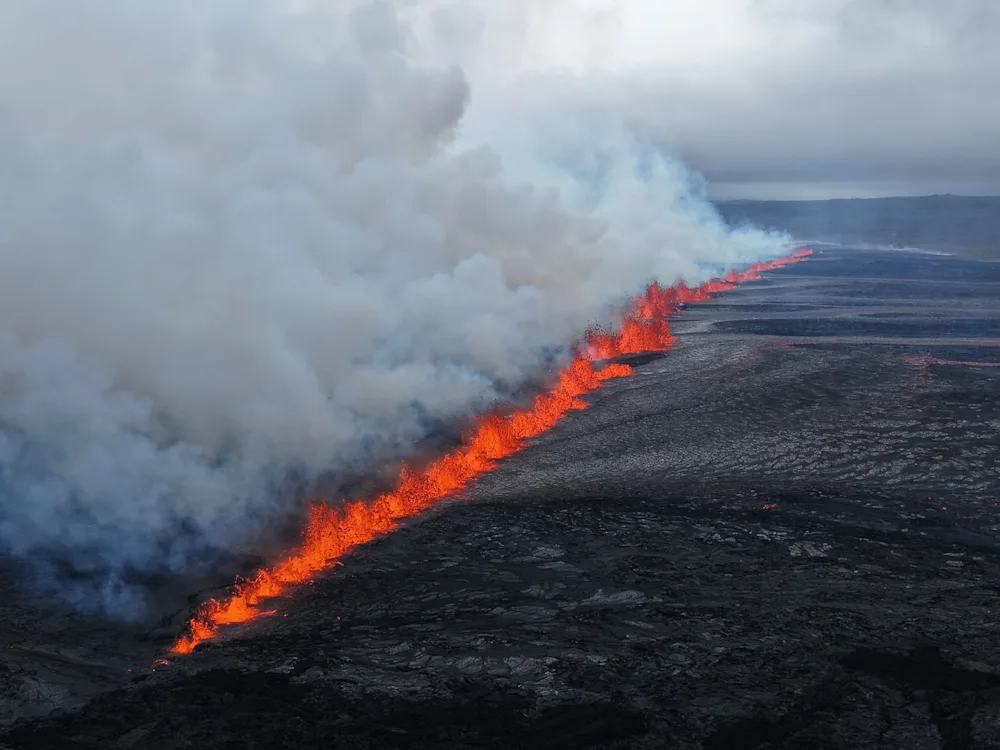
Weather conditions—especially wind direction and strength, as well as rainfall—have a major influence on how pollution spreads. The smallest airborne particles from volcanic eruptions (PM2.5) are particularly hazardous because they can reach deep into the lungs. High levels of sulfur dioxide (SO₂) can start affecting health within just 10–15 minutes of exposure. The longer the exposure, the more serious the health effects can be.
People living in or near affected areas are encouraged to regularly check air quality updates and gas pollution forecasts, and to be familiar with recommended protective measures. For detailed guidance, see the brochure Health Hazards from Air Pollution Caused by Volcanic Eruptions.
Protective Measures Against Volcanic Air Pollution
Stay informed: Monitor the Ambient Air Quality Map (Environment and Energy Agency) and the Gas Pollution Forecast (Icelandic Met Office). Follow official advice and updates.
Know the main precautions:
Stay indoors and close windows during high pollution events
Ventilate well once pollution levels drop
Minimize the number of times you go in and out of the home
Turn off air conditioning units where applicable
Avoid outdoor physical activity
Note: Traditional face masks do not protect against volcanic air pollution. Gas masks are not recommended for the general public
If brief outdoor exposure is unavoidable in very high pollution, breathe through a wet cloth and inhale slowly through the nose
Vulnerable individuals should contact their healthcare provider or a health center for advice on medications and health management.
Vulnerable groups include children, pregnant women, people with asthma, COPD or heart disease, and anyone over the age of 60.
Sulfur Dioxide and Sulfuric Acid
Health effects of sulfur dioxide (SO₂)
Exposure to high levels of SO₂ can affect health after just 10–15 minutes. For more information, refer to the brochure Health Hazards from Air Pollution Caused by Volcanic Eruptions.
SO₂ is a colorless gas with a distinctive smell, similar to fireworks or burnt matches. When inhaled, it reacts with moisture on mucous membranes, turning into sulfuric acid, which irritates the eyes, nose, and throat.
Most SO₂ inhaled through the nose and mouth does not accumulate in the body, and damage to internal organs is not known to occur. However, it is important to breathe calmly through the nose and avoid physical exertion when pollution is present.
If SO₂ reaches the lower respiratory tract (lungs), more serious symptoms such as asthma attacks and pulmonary swelling (edema) can develop.
SO₂ exposure effects can be short-term (minutes to hours) with sudden exposure to high levels or long-term (days to years) with prolonged exposure to lower or moderate levels.
Children are more vulnerable to SO₂ than adults because:
They breathe faster
They inhale more air in proportion to their body weight
They tend to breathe through the mouth more than the nose
Volcanic Smog
What is volcanic smog (also known as “blue smog”)?
A type of air pollution with a distinctive blue-gray color
Forms when sulfur dioxide (SO₂) and other gases from a volcanic eruption react with oxygen, moisture, and sunlight
This chemical reaction creates sulfate particles (SO₄), which are solid particles (not gases)
Volcanic smog cannot be detected with standard SO₂ gas meters
Health effects of volcanic smog:
More irritating than regular air pollution (e.g., from traffic)
Can cause fatigue, headaches, eye and throat irritation, and respiratory symptoms
While anyone can be affected, people with heart or lung conditions and children are most at risk. They should avoid outdoor exertion and limit time spent outside during polluted periods.
What to do if you feel discomfort from volcanic smog:
Limit physical activity
Stay indoors and keep windows closed
If symptoms persist or worsen, call the Health Care Information Center at 1700 or visit your local health center
For individuals with asthma or other lung conditions:
Ensure you have your inhaled medications available
Use them according to your doctor’s instructions
In case of increased symptoms, you may need to adjust your dose—but only after consulting a healthcare provider
The Chief Epidemiologist
Useful links
Information and advice on the health effects of pollution due to volcanic eruptions. Recommendations for the public on the Directorate of Health website.
Ambient air quality in Iceland. The Icelandic Environment and Energy Agency.
Gas Pollution Forecast. Icelandic Met Office.
Form to report gas pollution in inhabited areas. Icelandic Met Office.