
The Directorate of Health
Ebola outbreak in Africa – risk to the general population in Iceland remains very low
26th October 2026
The European Centre for Disease Prevention and Control (ECDC) has published a new risk assessment concerning the ongoing outbreak of Ebola disease caused by Bundibugyo virus in Africa. The outbreak has been most extensive in the Democratic Republic of the Congo (DRC), but cases have recently also been reported in Kenya and Nigeria.
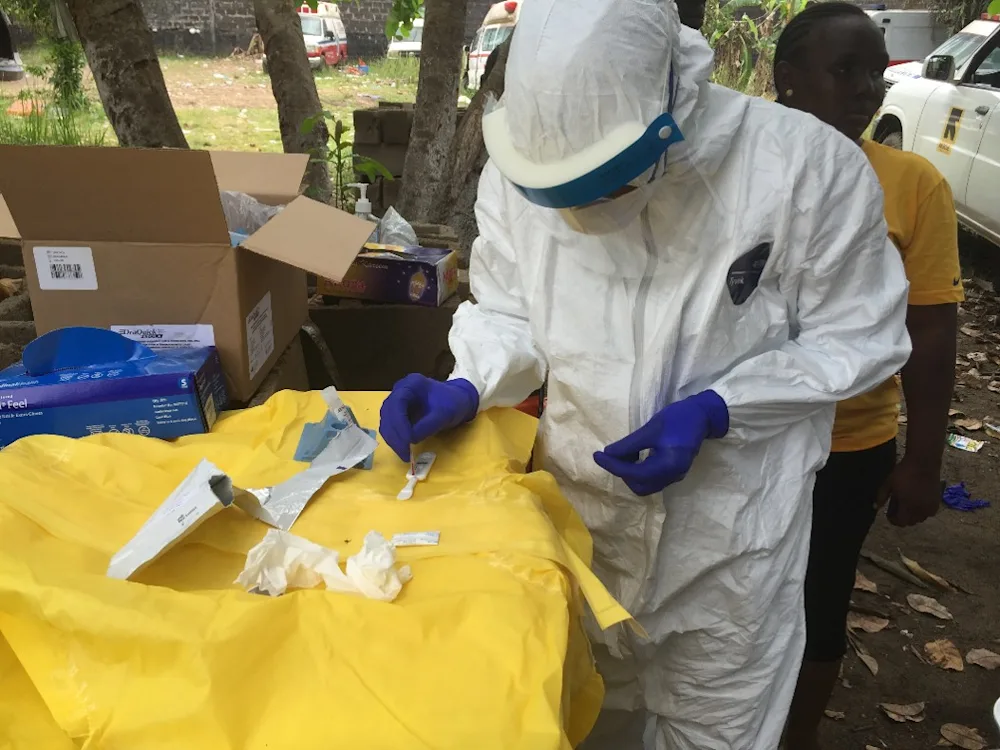
Photo: CDC/ John Saindon; CDC (PHIL)
Despite the geographical spread of the outbreak, ECDC continues to assess the risk to the general population in Iceland and elsewhere in the European Economic Area as very low.
Current outbreak situation
The outbreak began in the DRC in May 2026 and has since spread to eight provinces. According to ECDC, as of 21 October, 9,704 confirmed cases and 4,687 deaths had been reported. Cases have been detected in 66 health zones, predominantly in the provinces of Ituri and North Kivu, and transmission is ongoing.
Nine cases, including one death, have been reported in Kenya. Eight people, including four healthcare workers, were infected following contact with a person who had travelled from the DRC. In Nigeria, one case has been reported in a person who had travelled from Uganda. Contact tracing is ongoing in both countries.
A total of 20 cases were reported in Uganda earlier this year, but the outbreak there was declared over in August.
Since the beginning of the outbreak, one imported case has been detected in Europe, and three patients have been medically evacuated to Europe for treatment. All four were healthcare workers involved in humanitarian work in affected areas. All have recovered, and no secondary transmission has occurred in Europe.
Risk to the general population and travellers
ECDC assesses the likelihood of infection for ordinary travellers visiting affected areas in the DRC, Kenya and Nigeria as low, provided they follow the recommended precautionary measures. However, the outbreak is considerably more extensive in the DRC, where community transmission is ongoing. Healthcare and humanitarian workers, particularly those caring for patients or working closely with affected communities, face a higher risk of exposure than ordinary travellers.
Ebola disease is very serious, but the virus does not spread easily between people. Transmission occurs primarily through direct contact with the blood or other bodily fluids of infected individuals, or with objects contaminated by these fluids. People are not considered infectious until symptoms develop. The disease is not transmitted through the airborne route.
There is no specific drug treatment for Ebola disease caused by the Bundibugyo virus, and no vaccine against this virus has yet been licensed. However, the Ervebo vaccine, which is approved for use against another type of Ebola virus (Zaire ebolavirus), is being administered in the DRC under a special compassionate-use authorization while studies investigate whether it also provides protection against Bundibugyo virus.
Travel advice
ECDC assesses the likelihood of infection among ordinary travellers to affected areas as low, provided recommended precautions are followed. General travel restrictions to or from Kenya and Nigeria are not recommended in response to the cases reported in these countries. In the DRC, however, the outbreak is considerably more extensive, and transmission is ongoing.
People travelling to affected areas are advised to:
Avoid contact with sick individuals, their bodily fluids, and the bodies of deceased persons.
Avoid contact with wild animals, whether alive or dead, and avoid consuming bushmeat.
Practise good hand hygiene and general hygiene.
Wash and peel fruits and vegetables before consumption.
Practise safer sex and follow the advice of local health authorities.
Healthcare and humanitarian workers operating in affected areas should take particular care to follow infection prevention and control measures, use appropriate personal protective equipment, and adhere to monitoring protocols following possible exposure to the virus.
What should travellers do if symptoms develop after returning home?
The incubation period for Ebola disease is 2–21 days. Initial symptoms may include fever, headache, muscle pain and severe fatigue, followed by vomiting, diarrhea and, in some cases, bleeding.
People who have travelled to affected areas and develop symptoms compatible with Ebola disease within 21 days of returning home should avoid contact with others and immediately contact healthcare services by telephone. It is important to report recent travel history and any possible exposure to the virus before visiting a healthcare facility.
Preparedness in Iceland
ECDC does not consider general travel restrictions or screening of arriving travellers in Europe necessary. Instead, emphasis is placed on providing information to travellers, ensuring healthcare preparedness, early identification of suspected cases, and appropriate infection prevention and control measures. The Chief Epidemiologist of Iceland advises against non-essential travel to areas of the DRC where Ebola transmission is ongoing.
Although the likelihood of Ebola cases being imported into Iceland is very low, it is important that healthcare services are prepared to identify and safely manage any suspected cases.
The Chief Epidemiologist will continue to monitor the outbreak in cooperation with international health authorities and update recommendations as necessary.
The Chief Epidemiologist