
The Directorate of Health
This news article is more than a year old
Annual Report on Antibiotic Use and Antimicrobial Resistance in Bacteria in Humans and Animals in Iceland 2024
23rd September 2025
The thirteenth annual report on antibiotic use and resistance in humans and animals in Iceland with has been published.
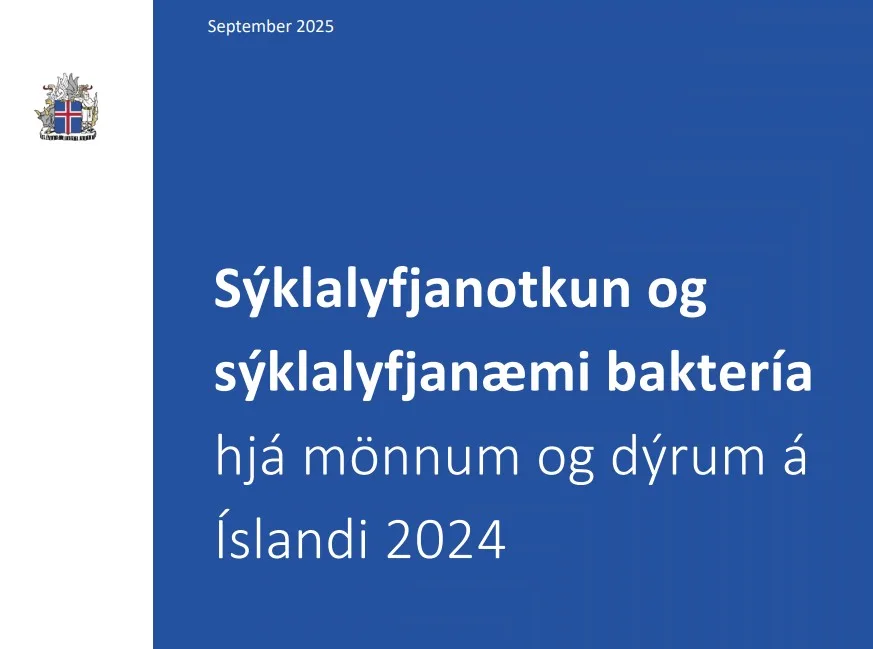
The report is the result of a collaboration with the Icelandic Food and Veterinary Authority (MAST), which provides chapters on antibiotic use in animals as well as antimicrobial resistance in bacteria linked to food and animals. Landspítali University Hospital, the Icelandic Medicines Agency, the Institute for Experimental Pathology at Keldur, and the Environment Agency of Iceland also contributed data to the report.
Antimicrobial use in humans and animals
In 2024, antibiotic use among people was similar to recent years. About one-third of the population received at least one antibiotic prescription during the year, a decrease compared to 2015. Most antibiotics were prescribed outside hospitals, mainly by general practitioners. Penicillin remains the most commonly prescribed class of antibiotics, while doxycycline was the most used individual antibiotic measured in defined daily doses (DDD). Iceland stands out in Europe for its low use of broad-spectrum antibiotics, which is positive since broad-spectrum use is more likely to drive antimicrobial resistance.
Antibiotic use in animals increased in 2024, mainly due to treatments in land-based Arctic char farming against atypical furunculosis. Excluding this use, antibiotic consumption in animals has not changed much in recent years, and Iceland remains among the EU/EEA countries with the lowest use of antibiotics in animals.
Antimicrobial resistance in humans and animals
Antimicrobial resistance in bacteria in humans remains generally low in Iceland compared with many EU/EEA countries, although increases have been observed in certain resistant strains. Of particular concern is the rise in carbapenemase-producing Enterobacterales (CPE), with 18 individuals diagnosed for the first time in 2024 — the highest number recorded. Resistance to ciprofloxacin in domestic Campylobacter strains has also increased in recent years.
In 2024, sampling in broilers was carried out in accordance with regulations on the monitoring of antimicrobial resistance in animals and food. The results showed a considerable increase in resistance compared with the previous monitoring round two years earlier.
One Health and the Icelandic Government’s Action Plan Against Antimicrobial Resistance
Antimicrobial resistance is a growing global challenge and one of the greatest health threats the world faces. The concept of “One Health” encompasses the health of humans, animals, and the environment and is highly relevant in the fight against antimicrobial resistance, as resistant bacteria can easily spread between humans, animals/food, and the environment.
In Iceland, the government has decided to strengthen cross-sector collaboration in the fight against antimicrobial resistance. In the summer of 2024, three ministers signed an official national action plan against antimicrobial resistance. The plan, which follows the One Health approach, covers the years 2025–2029 and includes six main actions along with numerous projects.
Looking ahead
Overall, the situation in Iceland regarding antibiotic use and resistance remains good, but continued monitoring and responsible use of antimicrobials are essential to maintain this favourable situation. Great hopes are tied to the government’s national action plan and ongoing support for measures aimed at curbing the spread of antimicrobial resistance.
The Chief Epidemiologist