
The Directorate of Health
Antibiotic use and the burden of antimicrobial resistance are highest in the oldest age groups
18th November 2025
The situation in Iceland is relatively good regarding antibiotic use and antimicrobial resistance (AMR), but a great deal of work remains.
Since antibiotic use and the burden of resistant bacteria are highest among the oldest age groups, this year’s annual symposium of the Chief Epidemiologist will be dedicated to nursing homes.
Awareness of Antimicrobial Resistance
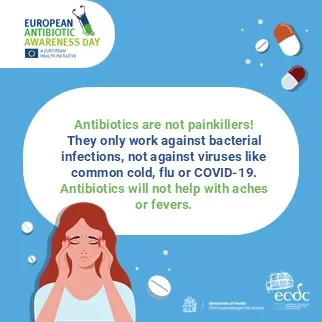
November 18 is dedicated to raising awareness about antibiotics by the European Centre for Disease Prevention and Control (ECDC). On the same day, the World Health Organization (WHO) launches its antimicrobial resistance awareness week. The purpose of this initiative is to remind the public, authorities, healthcare professionals, and other stakeholders of the threat posed by the spread of antibiotic-resistant bacteria worldwide. Further information can be found on the website of the Directorate of Health.
In 2024, antibiotic use among the population was similar to recent years, with about one-third of residents receiving at least one antibiotic prescription during the year. Most antibiotics were prescribed outside of hospitals, usually by general practitioners. The use of broad-spectrum antibiotics in Iceland is generally low, which is positive, as broad-spectrum agents tend to contribute more to antimicrobial resistance. Antibiotic use is highest among the youngest and oldest age groups.
Antibiotic resistance in bacteria in Iceland is generally low compared with many EU/EEA countries, although certain types of resistant bacteria have increased. Of particular concern is the rise in carbapenemase-producing Enterobacterales (CPE) from previous years. Eighteen individuals were diagnosed with CPE for the first time in 2024, the highest number recorded. The most common notifiable resistant organisms are bacteria that produce extended-spectrum beta-lactamases (ESBL/AmpC), which are most often detected in older adults—particularly women—and especially in connection with urinary tract infections.
A study conducted in Icelandic nursing homes showed that about 7% of residents received one or more antibiotics during the study period. More than half of all antibiotics were given for prophylactic purposes, which is high compared with other EU/EEA countries. Nearly half of these were used to prevent urinary tract infections.
Since antibiotic use and the burden of resistant bacteria are highest among the oldest age groups, the annual symposium of the Chief Epidemiologist will this year focus on nursing homes. The symposium will be held on Tuesday, November 18, at Hrafnista on Sléttuvegur, with an option to attend remotely.
The Situation in Europe
Each year, 4.3 million patients in the European Union/European Economic Area (EU/EEA) acquire at least one healthcare-associated infection (HAI), many of which are caused by resistant bacteria.
A healthcare-associated infection is an infection that a person acquires while staying in or receiving treatment within the healthcare system, and which was not present upon admission. This can occur, for example, in hospitals, at primary care clinics after procedures, in nursing homes, or in connection with home nursing. Common examples include urinary tract infections (often related to catheters), pneumonia (e.g., associated with ventilators), bloodstream infections (linked to intravenous catheters), and surgical site infections.
At any given time, around 7% of hospital patients in the EU/EEA—one in every 14—have at least one healthcare-associated infection. In nursing homes, about 3% of residents have at least one such infection.
One in three microorganisms found in healthcare-associated infections are bacteria resistant to important antibiotics, limiting treatment options. Each year, more than 35,000 people in EU/EEA countries die from infections caused by antibiotic-resistant bacteria. The mortality rate from these infections is comparable to the combined mortality from influenza, tuberculosis, and HIV/AIDS in the region.
The Future
Although Iceland’s situation is in many ways good with regard to antibiotic use and antimicrobial resistance, significant work remains. High hopes are placed on the implementation of the government’s recently adopted action plan. Participation in international collaboration is also important; for example, the Chief Epidemiologist is involved in the EU-JAMRAI-2 project, a partnership among 30 EU/EEA countries focused on actions to curb the spread of antimicrobial resistance.
The Chief Epidemiologist
Further information
Annual reports of the Chief Epidemiologist on antibiotic use and resistance in humans and animals:
Læknablaðið: Letter to the editor. European Antibiotic Awareness Day, 18 November
Government announcement on the antimicrobial resistance action plan
Government update on the implementation and monitoring of the action plan